

Insulin R 1unit/mL Ophthalmic Solution
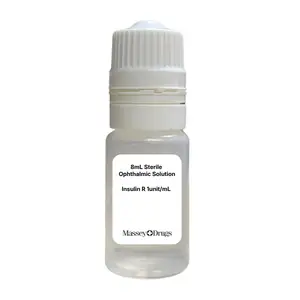
- Quantity: 8mL
- Price: $125 + Next Day Shipping. Login to the Practitioner Portal for all ophthalmic compounds pricing.
- Sig: Place 1 drop in affected eye(s) four times daily or as directed
Sterile compounded ophthalmic preparation available by prescription. The FDA does not review any compounded medication for safety or efficacy.
Based on insulin’s mechanism of action, hypothetical concerns with long-term use include corneal angiogenesis or fibrosis. Prescribers should monitor patients accordingly.
Insulin Eye Drops for Corneal Re-Epithelialization and Neurotrophic Conditions
Insulin ophthalmic solution is a compounded therapy used by ophthalmologists as an adjunctive treatment to support corneal wound healing and corneal nerve regeneration in compromised ocular surfaces.
At Massey Drugs, we compound sterile insulin eye drops for ophthalmologists managing difficult-to-heal corneas where standard therapies alone may be insufficient. Insulin ophthalmic solutions are not commercially available and must be prepared by a compounding pharmacy with sterile ophthalmic capabilities. We work directly with eye care specialists and ship to patients in licensed states with rapid turnaround.
What Is Insulin Ophthalmic Solution?
Insulin is a peptide hormone traditionally used systemically for blood glucose regulation. When administered systemically, insulin reaches the ocular surface in negligible concentrations.
When compounded as a topical ophthalmic solution, insulin has been reported in clinical literature to support corneal epithelial repair and corneal nerve regeneration, making compounding necessary for ophthalmic use.
Mechanism of Action on the Cornea
Insulin plays a role in epithelial cell signaling and nerve health. When administered topically to the eye, insulin is thought to:
- Stimulate corneal epithelial cell proliferation and migration
- Support re-epithelialization of the corneal surface
- Decrease local inflammation
- Improve corneal sensitivity and homeostasis through neuroregeneration
These effects may be particularly beneficial in ulcers after infection has been treated.
Clinical Scenarios Where Ophthalmologists Use Topical Insulin Eye Drops
Published reports and clinical experience describe the use of compounded insulin eye drops in patients with compromised corneal healing, including:
- Persistent corneal epithelial defects
- Neurotrophic keratopathy
- Dry eye disease with epithelial breakdown
- Post-surgical or post-traumatic corneal wound
Topical insulin is not considered a first-line therapy, but rather an adjunctive option in refractory or high-risk cases.
Is Insulin Ophthalmic Solution a Standard Treatment?
No. Insulin ophthalmic solution is not FDA-approved and is not commercially available.
Its use is supported by small clinical studies and published case reports. As with all compounded medications, the FDA does not evaluate insulin eye drops for safety or efficacy.
Preservative-Free Multidose Droppers
- Low preservative amount
- Compromised corneal epithelium
- Increased infection risk if contaminated
Our formulations are intended to support tolerability with minimal reports of irritation when used as directed.
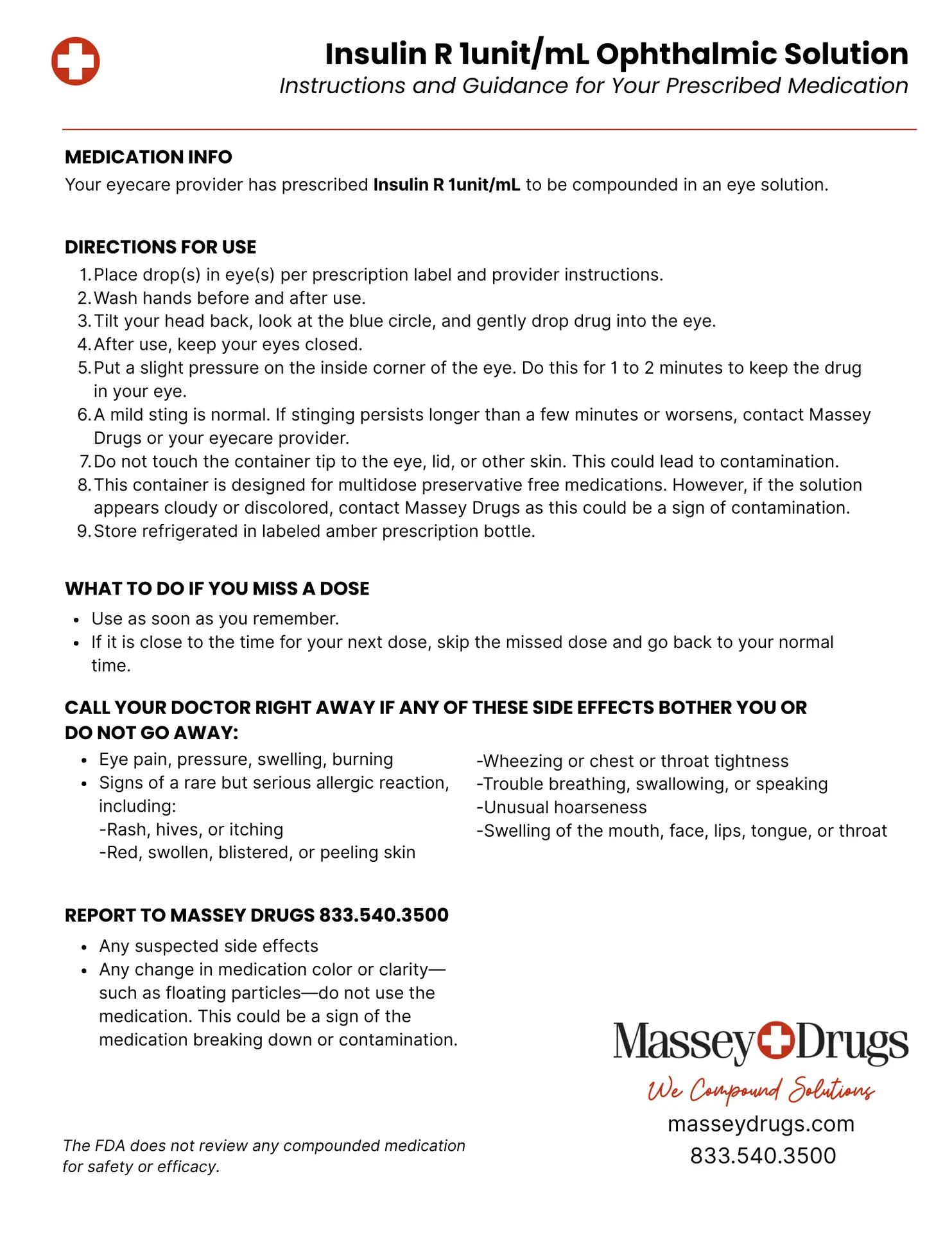
Patient Instructions for Use
Standardized patient instructions accompany insulin ophthalmic solution to reinforce correct instillation technique, storage requirements, and dosing frequency. Providing written guidance supports adherence and reduces variability in patient use during treatment.
Why Ophthalmologists Choose Massey Drugs
- Experienced sterile compounding laboratory for ophthalmic preparations
- Direct pharmacist access for formulation and clinical questions
- Familiarity with corneal and neurotrophic conditions
- Next-day shipping for insulin ophthalmic solutions (required)
- Tight control over sterile preparation standards
- NAPB Accredited Compounding Pharmacy
States We Serve

Massey Drugs is a sterile ophthalmic compounding pharmacy licensed to ship insulin ophthalmic solution to patients in:
Alabama, Tennessee, Mississippi, Louisiana, Georgia, Florida, North Carolina, South Carolina, Kentucky, Illinois, Indiana, Ohio, Pennsylvania, New York, Connecticut, and Texas.
How to Prescribe Insulin Ophthalmic Solution
Download Rx Blank from the Practitioner Portal and send to Massey Drugs:
FAX: 800.637.2601
Phone: 833.540.3500
OR
e-Scribe: NPI#: 1295756245 | NCPCP#: 0127553
Massey Drugs | Cloverdale Road
Upon receipt of prescription, Massey Drugs contacts the patient to confirm shipping address and credit card payment.
Medication ships to patient UPS Next Day once processed.
Massey Drugs provides competitively priced compounded ophthalmic eye drops with transparent, prescriber-accessible pricing.
All compound pricing can be viewed in our Practitioner Portal so costs can be communicated to patients before prescribing.
Speak with a Pharmacist
If you have questions about insulin ophthalmic compounding, dosing considerations, or appropriate clinical use, our pharmacists are available to consult.
Call 833-540-3500 to speak directly with a pharmacist.
Frequently Asked Questions
Can insulin eye drops be used alongside other dry eye or corneal therapies?
Yes. Ophthalmologists often prescribe compounded insulin ophthalmic solution alongside conventional ocular surface therapies such as lubricating drops, bandage contact lenses, or anti-inflammatory treatments. Because insulin eye drops are typically used as an adjunctive therapy in refractory cases, combination treatment protocols are common and individualized based on clinical response.
How long does it typically take to see improvement with insulin ophthalmic solution?
Clinical response varies depending on the severity of the epithelial defect or neurotrophic condition being treated. Some patients may demonstrate improvement in epithelial healing or corneal sensitivity within several weeks, while others may require longer treatment durations and close ophthalmic monitoring.
Do insulin eye drops affect blood sugar levels?
Topical ophthalmic insulin is used at very low concentrations and is applied locally to the ocular surface. Systemic absorption is expected to be minimal, and clinically meaningful effects on blood glucose are not typically anticipated. However, prescribers may consider monitoring in patients with brittle diabetes or other metabolic concerns.
What happens if a patient misses a dose of insulin eye drops?
If a dose is missed, patients are generally advised to administer the next scheduled dose as directed rather than doubling up. Consistent dosing is important to support epithelial healing, so reinforcing adherence and proper instillation technique can help optimize treatment outcomes.
Can insulin ophthalmic solution be used long term?
Duration of therapy is determined by the treating ophthalmologist based on corneal healing progress and overall ocular surface stability. Some patients may use insulin eye drops for a defined healing period, while others with chronic neurotrophic or epithelial disorders may require extended treatment with periodic reassessment.

Resources
- Topical insulin for ocular surface disease: A review
Journal of Ocular Pharmacology and Therapeutics, 2024. (PubMed) - Persistent Corneal Epithelial Defects: An overview of evaluation, current management and emerging therapies
Review of Ophthalmology (cornea/ocular surface review) — overview article published Oct 10, 2025. - Topical insulin eye drops show promise for treating ocular surface diseases
Ophthalmology360 — Ocular Surface Disease section (clinical/practice summary)
Additional Ophthalmic Compounding Capabilities
We compound additional sterile ophthalmic therapies used for:
- Post-operative Care
- Emergency & Infection Management
- Emergency & Corneal Scarring Support
- Glaucoma Compounding
- Myopia Management
Explore our full range of ophthalmic compounding capabilities.