


FDA PCAC Recommends Six Peptides for Inclusion on the 503A Bulks List
Updated: July 24, 2026
The FDA’s Pharmacy Compounding Advisory Committee (PCAC) concluded its two-day meeting on July 23-24, 2026, reviewing seven peptide nominations for potential inclusion on the 503A Bulks List.
At the conclusion of the meeting, the committee voted to recommend six of the seven peptides for inclusion on the 503A Bulks List. While these recommendations represent an important milestone in the FDA’s review process, they are advisory only. The FDA is not required to follow the committee’s recommendations, and these votes do not mean the peptides are FDA-approved. The FDA will make the final determination through its formal rulemaking process.
Committee Recommendations
The committee voted in favor of recommending the following peptides for inclusion on the 503A Bulks List:
- BPC-157
- KPV
- TB-500
- MOTS-c
- Semax
- Epitalon
The committee voted not to recommend:
- Emideltide (DSIP)
What This Means
The Pharmacy Compounding Advisory Committee provides scientific and clinical recommendations to the FDA regarding whether nominated bulk drug substances meet the statutory criteria for inclusion on the 503A Bulks List. The FDA will now review the committee’s recommendations before issuing proposed rules and ultimately making final decisions on whether these substances will be added to the list.
Until the FDA completes that process, the committee’s recommendations do not change the regulatory status of these peptides.
Massey Drugs will continue monitoring the FDA’s review process and provide updates as additional information becomes available.
Peptide Updates: Sign up to receive emails on peptide availability.
Peptide Compounding Pharmacy
(Pending FDA approval)
Peptide therapies are receiving increased physician and patient interest in areas such as metabolic health, recovery medicine, longevity protocols, and regenerative treatment strategies.
Massey Drugs is a licensed 503A, NABP accredited compounding pharmacy that prepares customized medications for prescribers across multiple specialties. We currently compound certain peptide medications used in clinical practice, including Sermorelin, and are preparing to introduce additional peptide formulations once permitted under applicable federal and state compounding regulations.
Our pharmacists are developing formulation protocols, ingredient sourcing workflows, preparation procedures, and stability monitoring plans so new peptide preparations can be introduced in a structured and responsible manner, if allowed.
Clinics Exploring Peptide Treatment Protocols
Across men’s health, longevity medicine, functional medicine, and recovery-focused practices, many clinics are actively evaluating how peptide therapies may fit into individualized treatment strategies.
Prescribers are discussing peptide use in areas such as:
- metabolic and body composition support
- recovery and performance protocols
- hormone signaling optimization
- regenerative and tissue-support strategies
- longevity-focused care plans
As interest continues to grow, some clinics are working with compounding pharmacies to better understand formulation options, prescribing workflows, patient education needs, and implementation considerations.
Massey Drugs is engaged in ongoing clinical conversations with practices that are preparing to introduce peptide therapies when appropriate compounding pathways are available.
How New Peptide Preparations Are Introduced
When a peptide becomes eligible for pharmacy compounding, Massey Drugs follows a defined preparation pathway before introducing the formulation for prescribing.
This typically includes:
- Qualification of pharmaceutical-grade active pharmaceutical ingredients
- Development of formulation strengths and dosage forms
- Establishment of documented compounding procedures
- Determination of preparation environment requirements (including sterile technique for injectables)
- Implementation of preparation verification and documentation workflows
These steps help support consistency, traceability, and appropriate handling of peptide medications in pharmacy practice.
Introduction Timeline for New Peptide Preparations
If regulatory changes allow additional peptide formulations to be compounded, these medications will not be introduced immediately.
Before new peptide preparations become available for prescribing, Massey Drugs completes formulation implementation steps that may include internal stability monitoring at approximately 30-, 45-, and 60-day intervals.
This structured rollout approach helps inform beyond-use dating, storage guidance, and preparation consistency based on real-world compounding experience.
Because of this process, there may be a defined period between regulatory eligibility and clinical availability of certain peptide formulations.
Prescriber Support and Ordering
Once compounding is approved from the FDA, physicians may prescribe compounded peptide medications through e-script, FAX, or verbal prescriptions when permitted.
Our pharmacists are available to assist with:
- formulation selection
- strength considerations
- administration guidance
- storage and handling questions
Turnaround and Dispensing
Once available for compounding, most peptide prescriptions are prepared and shipped within 24–48 hours after required prescription information is received.
Medications can be shipped directly to clinics or patients in the states we serve.
States We Serve
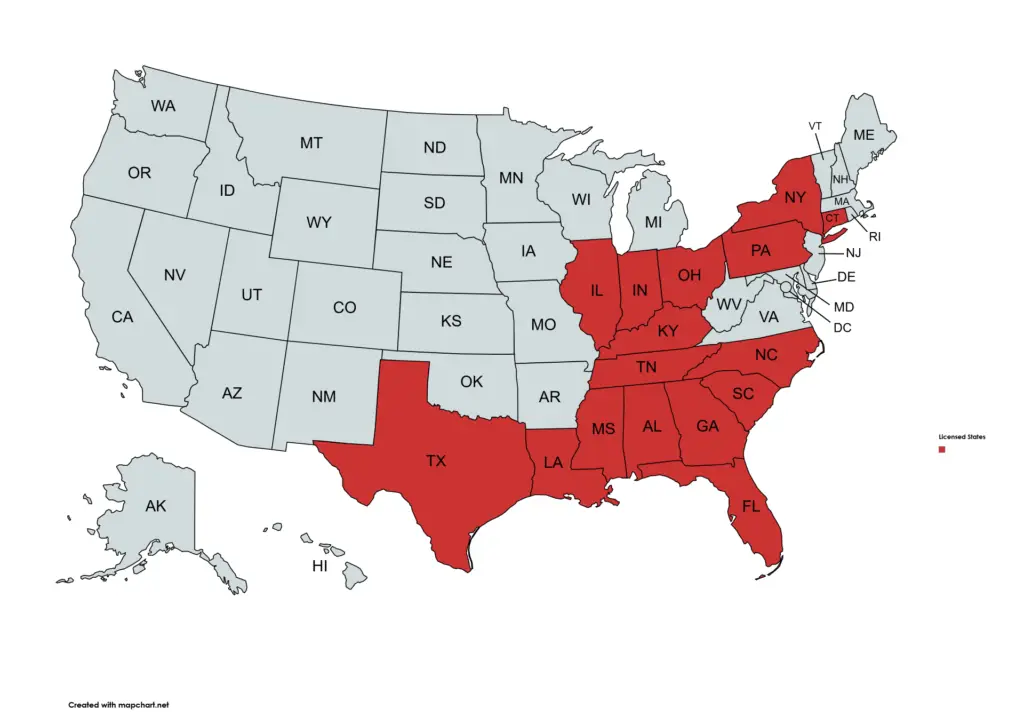
Massey Drugs is licensed to ship medications to patients in the following states:
Alabama, Mississippi, Tennessee, Georgia, Kentucky, Illinois, Florida, North Carolina, Ohio, Pennsylvania, New York, Louisiana, South Carolina, Indiana, Texas, and Connecticut.
Peptide Availability Updates
Physicians and patients interested in compounded peptide therapies are encouraged to bookmark this page for availability updates as new preparations are introduced. Prescribers can register for the Practitioner Portal to receive communication when peptides are available.
Frequently Asked Questions
How many FDA-approved peptide drugs are there?
There are over 80 FDA-approved peptide drugs as of 2026. These range from insulin analogs and GLP-1 agonists to oxytocin, ACTH, and gonadotropin-releasing hormone analogs. The most well-known recent approvals include semaglutide (Ozempic/Wegovy, 2017/2021), tirzepatide (Mounjaro/Zepbound, 2022/2023), and bremelanotide (Vyleesi, 2019).
Can I get FDA-approved peptides without a prescription?
No. All FDA-approved peptide drugs are prescription-only medications in the United States. You need a valid prescription from a licensed healthcare provider. Telehealth platforms and anti-aging clinics can prescribe many of these medications after a consultation. Over-the-counter peptide products (like collagen peptides or cosmetic copper peptides) are classified as supplements or cosmetics, not drugs.
What’s the difference between Category 1 and FDA approval?
Category 1 is permission to compound, not an endorsement of safety or efficacy. FDA-approved drugs have completed Phase I through Phase III clinical trials, received formal approval for specific indications, and carry standardized dosing and labeling. Category 1 compounds have none of that. They are legal to compound but not proven to FDA standards for any specific condition.
Can a physician prescribe BPC-157 right now?
No. Legal compounding pharmacies cannot compound BPC-157 at this time. BPC-157 is currently in Category 2 of the FDA’s interim 503A Bulks List, which means 503A compounding pharmacies are not permitted to compound it for any patient or indication. Any BPC-157 available to consumers today is being sourced outside of the regulated pharmacy channel. This status can only change if the FDA reclassifies the substance following review by the Pharmacy Compounding Advisory Committee (PCAC). Any source of BPC-157 currently reaching American consumers is either a research-chemical website or an unlawfully-operating compounding operation.
Regulatory Notice: Peptide formulations referenced on this page are discussed for informational purposes only. Compounded medications may only be prepared when permitted under applicable federal and state compounding regulations governing bulk drug substances.