
Sermorelin Injectable
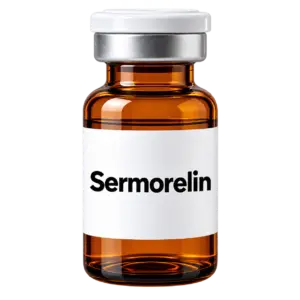
Quantity: 10mL
Clinic Price: $110 + shipping
Patient Price: $150 + shipping
Available by prescription. The FDA does not review any compounded medication for safety or efficacy.
Sermorelin Injections for Clinics and Patients
Massey Drugs prepares compounded Sermorelin Acetate 1.5 mg/mL injections for patient-specific prescriptions. As an NABP-accredited compounding pharmacy, we work with healthcare providers and clinics to provide sterile injectable formulations for patients under medical supervision.
Our pharmacy offers prescription fulfillment, patient instructions, and direct access to our pharmacists for questions about medication storage, preparation, and administration. We are committed to making the prescribing process straightforward for both clinics and patients.
What is Sermorelin?
Sermorelin acetate is a synthetic 29-amino-acid peptide that mimics the active portion of growth hormone-releasing hormone (GHRH). It acts on receptors in the anterior pituitary gland, stimulating the release of the body’s own growth hormone.
Growth hormone plays a role in several physiological processes, including:
Growth hormone regulation: Stimulates the body’s natural growth hormone secretion.
IGF-1 production: Growth hormone signals the liver and other tissues to produce insulin-like growth factor 1 (IGF-1).
Metabolism: Growth hormone and IGF-1 participate in the regulation of protein, fat, and carbohydrate metabolism.
Body composition: Growth hormone signaling contributes to processes involved in muscle and fat metabolism.
Tissue maintenance: Growth hormone and IGF-1 are involved in normal tissue growth and repair.
Unlike direct growth hormone replacement, Sermorelin stimulates the body’s existing growth hormone signaling pathway.
Although Sermorelin has been studied for its effects on growth hormone secretion, evidence supporting its use for anti-aging, athletic performance, cognitive enhancement, or general wellness in otherwise healthy adults remains limited. Treatment decisions should be based on individual clinical evaluation.
Who May Be Considered for Sermorelin Therapy?
Healthcare providers may evaluate Sermorelin therapy in selected patients when clinically appropriate. Because growth hormone regulation is complex, treatment decisions should consider the patient’s medical history, symptoms, laboratory findings, and potential risks.
Factors a prescriber may evaluate include:
Suspected abnormalities in growth hormone secretion.
IGF-1 levels interpreted in the context of age and clinical findings.
Symptoms or medical conditions that warrant further endocrine evaluation.
Current medications and underlying health conditions.
The potential benefits, limitations, and risks of treatment.
Sermorelin is sometimes prescribed in medically supervised hormone or longevity programs. However, its effectiveness for age-related symptoms and general wellness has not been established through robust clinical trials.
Appropriate laboratory evaluation and ongoing monitoring should be determined by the prescribing healthcare provider.
Sermorelin Safety and Precautions
Sermorelin therapy requires an individualized medical evaluation. Because growth hormone and IGF-1 signaling can influence multiple physiological processes, prescribers should carefully review each patient’s medical history, underlying conditions, and potential treatment risks.
Patients who may require additional evaluation or for whom treatment may be inappropriate include:
Individuals with active cancer or a history of certain malignancies.
Patients with uncontrolled diabetes or significant endocrine disorders.
Individuals with untreated thyroid or adrenal conditions.
Women who are pregnant or breastfeeding, due to insufficient safety data.
Patients with a known hypersensitivity to Sermorelin or formulation ingredients.
Children and adolescents without appropriate specialist evaluation and supervision.
Treatment should be prescribed and monitored by a qualified healthcare provider. Laboratory testing, including IGF-1 when appropriate, and follow-up evaluations may be necessary to assess treatment response and safety.
Injectable Sermorelin
Sermorelin is commonly administered by subcutaneous injection. This route delivers the peptide without exposing it to breakdown in the digestive tract and is the administration method used in much of the published clinical research on Sermorelin.
Why Is Sermorelin Commonly Administered by Injection?
- Systemic delivery: Subcutaneous administration allows Sermorelin to enter the bloodstream without passing through the gastrointestinal tract.
- Established research history: Injectable Sermorelin has been evaluated in clinical studies examining growth hormone secretion and related endocrine responses.
- Physiological mechanism: Once absorbed, Sermorelin stimulates growth hormone-releasing hormone receptors in the pituitary gland, promoting endogenous growth hormone secretion.
- Prescriber-directed administration: Injection schedules can be individualized based on clinical evaluation and the prescribed formulation.
The prescribing healthcare provider determines the appropriate dose, administration schedule, and monitoring requirements.
Patients should receive instructions on proper injection technique, storage, and safe handling. If preparation or reconstitution is required, patients should follow the specific instructions provided by the dispensing pharmacy.
Sermorelin Oral Suspension
Massey Drugs also offers compounded Sermorelin oral suspension for patient-specific prescriptions. This formulation may be considered when a prescriber determines that an alternative to injection is appropriate.
Peptides such as Sermorelin are susceptible to degradation in the gastrointestinal tract, which can limit absorption when administered orally. Clinical research on injectable Sermorelin should not be assumed to establish the effectiveness of oral or sublingual formulations.
Prescribers considering oral suspension should evaluate:
- Patient preference and ability to follow the prescribed administration instructions.
- Differences in absorption and bioavailability compared with injectable formulations.
- The limited clinical evidence available for oral Sermorelin.
- Appropriate monitoring and assessment of treatment response.
Massey Drugs pharmacists are available to discuss formulation-specific questions, storage, and administration instructions with prescribing healthcare providers.
Sermorelin Safety and Monitoring
Patients receiving Sermorelin therapy should be evaluated and monitored by their prescribing healthcare provider. Monitoring requirements depend on the patient’s medical history, treatment goals, prescribed formulation, and clinical response.
Depending on the individual patient, prescribers may assess:
- IGF-1 levels: Baseline and follow-up testing when clinically appropriate.
- Glucose metabolism: Blood glucose or other metabolic markers, particularly in patients with diabetes or metabolic concerns.
- Thyroid function: Evaluation when indicated by the patient’s medical history or symptoms.
- Clinical response: Assessment of treatment response, tolerability, and any new symptoms.
- Adverse effects: Monitoring for injection-site reactions, headache, flushing, fluid retention, or other concerning symptoms.
Patients should report unexpected or persistent symptoms to their healthcare provider. The safety profile may differ by formulation and route of administration.
Compounded Sermorelin medications are not FDA-approved. The FDA does not review compounded medications for safety, effectiveness, or quality before they are marketed.
Frequently Asked Questions (FAQs)
Is sermorelin the same as growth hormone?
No. Sermorelin is a synthetic peptide that stimulates the pituitary gland to release the body’s own growth hormone. It is not the same as somatropin, which is a form of human growth hormone used in replacement therapy.
How long does it take to notice changes with Sermorelin injections?
Responses to Sermorelin vary depending on the individual, prescribed dose, and clinical circumstances. Although Sermorelin stimulates growth hormone secretion, there is insufficient clinical evidence to establish a reliable timeline for improvements in energy, body composition, sleep, or other wellness-related outcomes.
Is laboratory monitoring required during Sermorelin therapy?
Prescribers may recommend baseline and follow-up laboratory testing, including IGF-1 levels, glucose measurements, and other evaluations based on the patient’s medical history. Monitoring requirements should be determined by the treating healthcare provider.
Can Sermorelin be combined with other therapies?
Prescribers may consider Sermorelin alongside other treatments when clinically appropriate. Potential interactions, treatment goals, and monitoring requirements should be evaluated individually. Massey Drugs pharmacists are available to answer formulation and medication-related questions.
What is the difference between injectable Sermorelin and oral Sermorelin?
Injectable Sermorelin is generally administered subcutaneously, allowing the peptide to enter systemic circulation without passing through the digestive tract. Oral Sermorelin may be subject to degradation and variable absorption. Most published clinical research evaluating Sermorelin’s effects on growth hormone secretion has involved injectable administration. Evidence for oral formulations remains limited.
How much do Sermorelin injections cost at Massey Drugs?
Massey Drugs offers compounded Sermorelin injectable in 10 mL vials. Current pricing is $110 per vial for clinics and $150 per vial for patients, plus shipping. A valid prescription is required. Contact our pharmacy for additional prescribing and ordering information.
Are compounded Sermorelin injections FDA-approved?
No. Compounded Sermorelin injections are not FDA-approved. The FDA does not review compounded medications for safety, effectiveness, or quality before they are marketed. Compounded medications are prepared for individual patients based on valid prescriptions when applicable legal requirements are met.
States We Serve

Massey Drugs is a 503A compounding pharmacy with NABP Compounding Pharmacy Accreditation. We prepare patient-specific compounded medications, including injectable Sermorelin, for patients with valid prescriptions from licensed healthcare providers.
We are licensed to dispense and ship prescriptions to patients in 16 states:
Alabama, Mississippi, Tennessee, Texas, Louisiana, Florida, Georgia, Kentucky, Indiana, Illinois, Ohio, Pennsylvania, New York, Connecticut, North Carolina, and South Carolina.
Healthcare providers in these states can contact Massey Drugs for information about our sterile compounding services, available formulations, and prescribing process.
How to Prescribe Sermorelin
Download prescription form from the Practitioner Portal and send to Massey Drugs:
FAX: 800.637.2601
Phone: 833.540.3500
OR
e-Scribe: NPI#: 1295756245 | NCPDP#: 0127553
Massey Drugs | Cloverdale Road
Upon receipt of prescription, Massey Drugs contacts the patient to confirm shipping address and credit card payment.
After the patient’s shipping address and payment are confirmed, prescriptions are typically processed and shipped within 24–48 hours. Shipping charges apply.
Massey Drugs provides competitively priced compounds with transparent, prescriber-accessible pricing.
All compound pricing can be viewed in our Practitioner Portal so costs can be communicated to patients before prescribing.
Speak with a Pharmacist
Have questions about compounded Sermorelin injections?
Our pharmacists are available to assist healthcare providers with formulation information, storage requirements, administration considerations, and prescription questions.
Call 833-540-3500 to speak with a Massey Drugs pharmacist.
Resources
Explore all our longevity and anti-aging compounds.