
Timolol 0.5% / Brimonidine Tartrate 0.2% / Dorzolamide 2% Preservative-Free Ophthalmic Solution
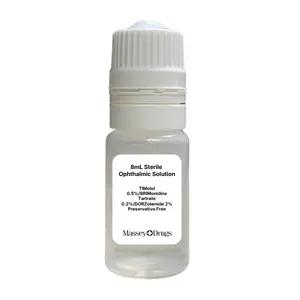
Quantity: 8 mL
Sig: Place one drop in each eye twice daily (BID).
Price: $50
Sterile compounded ophthalmic preparation available by prescription. The FDA does not review any compounded medication for safety or efficacy.
What is Timolol / Brimonidine / Dorzolamide Ophthalmic Solution?
This is a compounded preservative-free ophthalmic solution containing:
- Timolol 0.5% – beta-blocker
- Brimonidine tartrate 0.2% – alpha-2 adrenergic agonist
- Dorzolamide 2% – carbonic anhydrase inhibitor
Each agent targets intraocular pressure through a different pathway. In clinical practice, combination therapy is commonly used when a single medication does not achieve target IOP. Compounding allows these agents to be combined into a single preservative-free drop, reducing the need for multiple separate prescriptions.
What is the Mechanism of Action?
Each component contributes to IOP reduction through a distinct mechanism:
- Timolol
- Decreases aqueous humor production by blocking beta receptors in the ciliary body
- Brimonidine
- Reduces aqueous humor production
- Increases uveoscleral outflow
- Dorzolamide
- Inhibits carbonic anhydrase
- Decreases bicarbonate formation and fluid production in the eye
Together, these mechanisms provide a multi-pathway approach to lowering intraocular pressure.
Clinical Scenarios Where Ophthalmologists Explore Timolol / Brimonidine / Dorzolamide Ophthalmic Solution
Ophthalmologists may consider this compounded formulation in scenarios such as:
- Primary open-angle glaucoma
- Ocular hypertension
- Patients requiring multiple IOP-lowering agents
- Cases where adherence is a concern, and regimen simplification may be beneficial
- Patients intolerant to preservatives in commercial formulations
- Adjunctive therapy when additional pressure reduction is needed
Use is determined by the treating ophthalmologist based on target IOP, disease progression, and patient-specific factors.
Why Ophthalmologists Choose Massey Drugs
- Sterile compounding laboratory experienced in ophthalmic preparations
- Preservative-free formulations tailored for ocular use
- Direct pharmacist access for clinical questions
- Fast turnaround with patient shipment typically within 24–48 hours
- Experience working with corneal specialists and surgical practices
- NABP Accredited Compounding Pharmacy
States We Serve
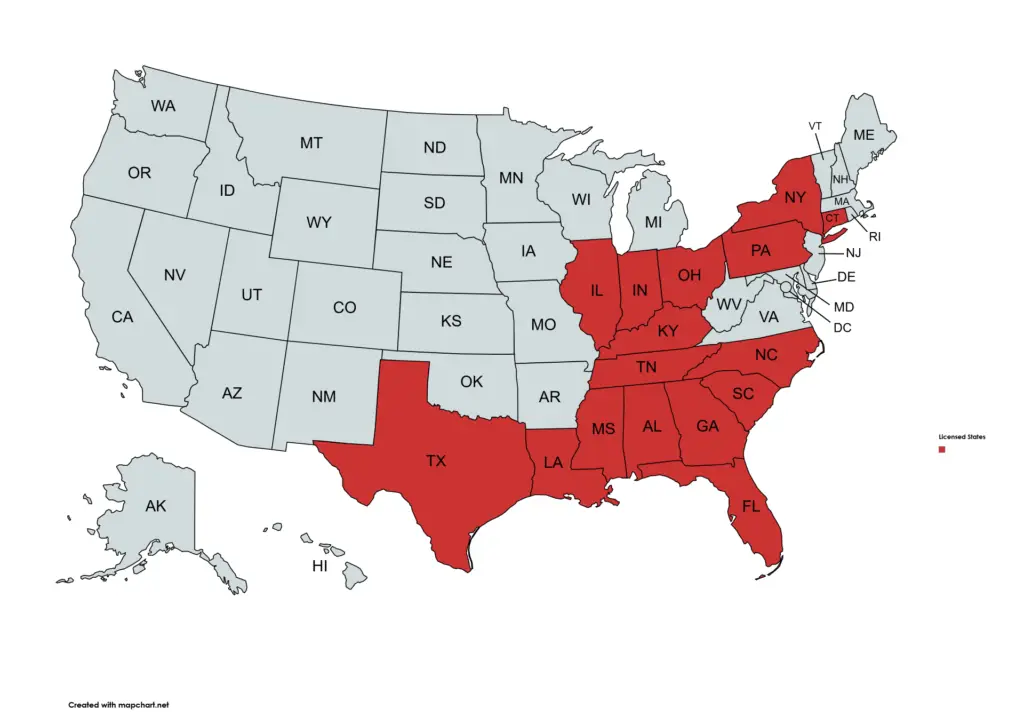
Massey Drugs is a sterile ophthalmic compounding pharmacy licensed to ship ophthalmic solutions to patients in: Alabama, Tennessee, Mississippi, Louisiana, Georgia, Florida, North Carolina, South Carolina, Kentucky, Illinois, Indiana, Ohio, Pennsylvania, New York, Connecticut, and Texas.
How to Prescribe Timolol / Brimonidine / Dorzolamide Ophthalmic Solution
Download Rx Blank from the Practitioner Portal and send to Massey Drugs:
FAX: 800.637.2601
Phone: 833.540.3500
OR
e-Scribe: NPI#: 1295756245 | NCPCP#: 0127553
Massey Drugs | Cloverdale Road
Upon receipt of prescription, Massey Drugs contacts the patient to confirm shipping address and credit card payment.
Medication ships to patient in 24-48 hours once processed.
Massey Drugs provides competitively priced compounded ophthalmic eye drops with transparent, prescriber-accessible pricing. All compound pricing can be viewed in our Practitioner Portal so costs can be communicated to patients before prescribing.
Speak with a Pharmacist
If you have questions about ophthalmic compounding, formulation options, or whether this therapy may be appropriate for a specific clinical scenario, our pharmacists are available to consult. Call 833-540-3500 or contact us.
Frequentley Asked Questions
Are there considerations for systemic effects with timolol-containing drops?
Because timolol is a beta-blocker, ophthalmologists may consider patient history such as asthma, COPD, or certain cardiac conditions when selecting therapy.
Why include both brimonidine and dorzolamide in the same formulation?
These agents work through different mechanisms, allowing for additive IOP-lowering effects when used together.
When would a triple-combination drop be considered instead of dual therapy?
Triple therapy may be considered when target intraocular pressure is not achieved with one or two agents, and adding a third mechanism is clinically appropriate.
Additional Ophthalmic Compounding Capabilities
We compound additional sterile ophthalmic therapies used for:
- Post-operative Care
- Emergency & Infection Management
- Emergency & Corneal Scarring Support
- Glaucoma Compounding
- Myopia Management
Explore our full range of ophthalmic compounding capabilities.