
Timolol 0.5% / Brimonidine Tartrate 0.2% / Dorzolamide 2% / Bimatoprost 0.01% Preservative-Free Ophthalmic Solution
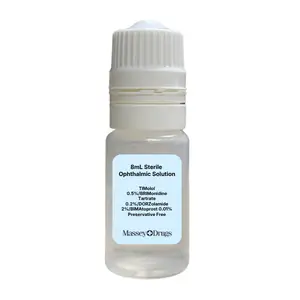
Quantity: 8 mL
Price: $55
Sterile compounded ophthalmic preparation available by prescription. The FDA does not review any compounded medication for safety or efficacy.
What is Timolol / Brimonidine / Dorzolamide / Bimatoprost Ophthalmic Solution?
This is a compounded preservative-free ophthalmic solution containing:
- Timolol 0.5% – beta-blocker
- Brimonidine tartrate 0.2% – alpha-2 adrenergic agonist
- Dorzolamide 2% – carbonic anhydrase inhibitor
- Bimatoprost 0.01% – prostaglandin analog
Each agent contributes to intraocular pressure reduction through a different mechanism. In clinical practice, multi-drug therapy is often required when single or dual agents do not achieve adequate IOP control.
Compounding allows these medications to be combined into a single, preservative-free formulation, simplifying complex regimens.
What is the Mechanism of Action?
Each component reduces IOP through a distinct pathway:
- Timolol
- Decreases aqueous humor production via beta-receptor blockade
- Brimonidine
- Reduces aqueous production
- Increases uveoscleral outflow
- Dorzolamide
- Inhibits carbonic anhydrase
- Reduces fluid production in the ciliary body
- Bimatoprost
- Increases uveoscleral outflow
- Enhances aqueous humor drainage
Together, these mechanisms provide a comprehensive, multi-pathway approach to lowering intraocular pressure.
Clinical Scenarios Where Ophthalmologists Explore This Combination
Ophthalmologists may consider this compounded formulation in scenarios such as:
- Advanced or difficult-to-control glaucoma
- Ocular hypertension not at goal with multiple agents
- Patients already prescribed multiple separate drops
- Situations where adherence is a concern, and regimen simplification may help
- Patients intolerant to preservatives in commercial products
- Cases requiring maximum topical therapy prior to procedural intervention
Use is determined by the treating ophthalmologist based on disease severity, target IOP, and patient-specific factors.
Why Ophthalmologists Choose Massey Drugs
- Sterile compounding laboratory experienced in ophthalmic preparations
- Preservative-free formulations tailored for ocular use
- Direct pharmacist access for clinical questions
- Fast turnaround with patient shipment typically within 24–48 hours
- Experience working with corneal specialists and surgical practices
- NABP Accredited Compounding Pharmacy
States We Serve
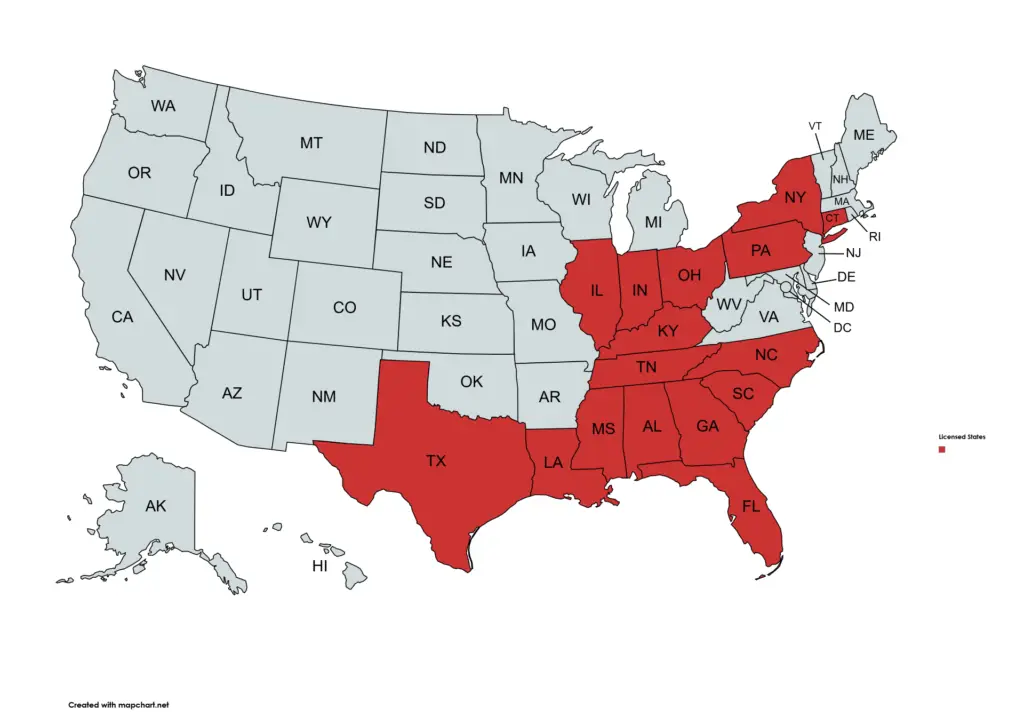
Massey Drugs is a sterile ophthalmic compounding pharmacy licensed to ship ophthalmic solutions to patients in: Alabama, Tennessee, Mississippi, Louisiana, Georgia, Florida, North Carolina, South Carolina, Kentucky, Illinois, Indiana, Ohio, Pennsylvania, New York, Connecticut, and Texas.
How to Prescribe Timolol / Brimonidine / Dorzolamide / Bimatoprost Ophthalmic Solution
Download Rx Blank from the Practitioner Portal and send to Massey Drugs:
FAX: 800.637.2601
Phone: 833.540.3500
OR
e-Scribe: NPI#: 1295756245 | NCPCP#: 0127553
Massey Drugs | Cloverdale Road
Upon receipt of prescription, Massey Drugs contacts the patient to confirm shipping address and credit card payment.
Medication ships to patient in 24-48 hours once processed.
Massey Drugs provides competitively priced compounded ophthalmic eye drops with transparent, prescriber-accessible pricing. All compound pricing can be viewed in our Practitioner Portal so costs can be communicated to patients before prescribing.
Speak with a Pharmacist
If you have questions about ophthalmic compounding, formulation options, or whether this therapy may be appropriate for a specific clinical scenario, our pharmacists are available to consult. Call 833-540-3500 or contact us.
Frequentley Asked Questions
When would a four-drug combination be considered in glaucoma management?
This type of combination may be considered in patients with advanced disease or persistently elevated IOP despite multi-drug therapy, where additional pressure reduction is needed.
What are the advantages of combining four agents into one formulation?
A single formulation may reduce drop burden, dosing complexity, and timing errors, which can be challenges in patients managing multiple medications.
Are there specific patient populations where timolol-containing combinations require caution?
Yes. Providers may evaluate patients with respiratory conditions (e.g., asthma, COPD) or certain cardiac conditions, as beta-blockers can have systemic effects.
Additional Ophthalmic Compounding Capabilities
We compound additional sterile ophthalmic therapies used for:
- Post-operative Care
- Emergency & Infection Management
- Emergency & Corneal Scarring Support
- Glaucoma Compounding
- Myopia Management
Explore our full range of ophthalmic compounding capabilities.